Welcome to Peoples Review Political,Business and sports news from Nepal http://www.peoplesreview.com.np/index.php?option=com_content&view=frontpage Thu, 17 May 2012 23:13:10 +0000 Joomla! 1.5 - Open Source Content Management en-gb Incomplete constitution by 27 May Three-party leaders negotiate inside dark-room under RAW initiative http://www.peoplesreview.com.np/index.php?option=com_content&view=article&id=8962:incomplete-constitution-by-27-may-three-party-leaders-negotiate-inside-dark-room-under-raw-initiative&catid=34:weekly-news&Itemid=54 By Prajwal Shrestha
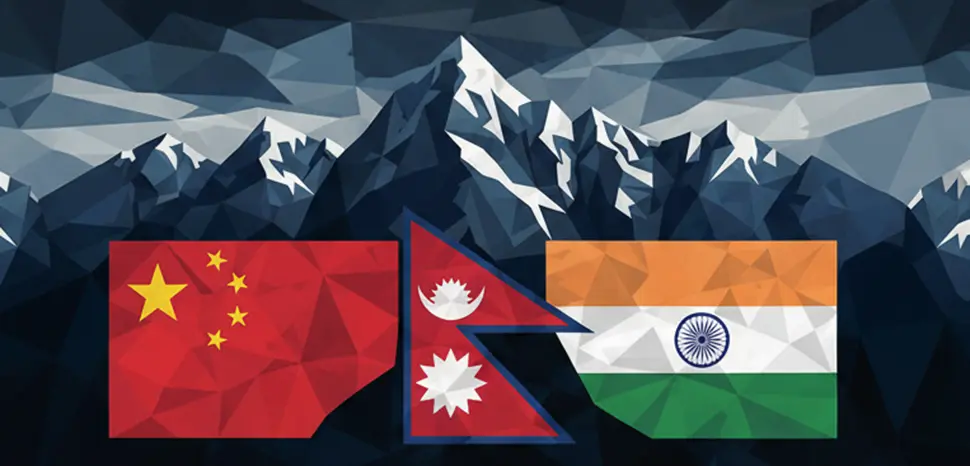
The leaders of the “gang-of-three plus Madheshis” have agreed to promulgate an incomplete draft of the constitution by 27 May and they have also decided to transform the present Constituent Assembly into a parliament until the next general election is held. It has also been decided to resolve the remaining issues to be resolved by the parliament transformed from the CA. The agreement was signed by the leaders of three parties on Tuesday.

Jana Aastha vernacular weekly reports that Indian RAW chief Sanjeev Tripathi and his regional officers stationed in Baneshwor, were active for the three-party-agreement.
Tripathi and his team arrived here on Sunday were staying here without producing real identity. They were busy in exclusive meetings with leaders from different political parties and finally the leaders had agreed for the agreement, according to the Weekly.    
India’s concern:
India wants to take credit for the promulgating of the constitution on time, as she had initiated the 12-point deal and given the final decision on that deal. The US and even the UN have encouraged India by saying that India has a great role to play in the peace process in the country.
As per the Indian plan, the political parties here reached to a five-point deal and also agreed to promulgate the incomplete constitution by 27 May and also agree on the continuation of the CA in the form of a parliament.
The overt plan is to give a constitution to the country, however, the covert plan is to create a split in the Maoist party and suppress the Mohan Vaidya camp, who has been seen as an extreme critic of India. Furthermore, India plans to fulfill all her requisitions from Nepal by using Dr Baburam Bhattarai and Pushpakamal Dahal and has already given assurance to elect Dahal as the president directly from the people. The Indian wish is also to make Bijaya Gachhadar as the directly elected vice-president of the republic Nepal. There is strong possibility of electoral alliance between the two former hostile forces – Maoists and Madheshis – to get the two top posts as per the Indian wish.
India’s ultimate aim is to bring Nepal permanently under the Indian security umbrella, against which the Kings of Nepal had to struggle hard. But by using the so-called extremist revolutionary forces, India plans to achieve all these tasks easily.
However, the three-party agreement for promulgating an incomplete constitution will not address the demand of any of the community and it is believed that although the leaders have been able to buy more time to stay in power, they are pushing their voters for bloodbath.
]]>
frontpage Thu, 17 May 2012 00:54:23 +0000
27 May terrorizing people Bandh everywhere, Nepal bandh today, tomorrow http://www.peoplesreview.com.np/index.php?option=com_content&view=article&id=8930:27-may-terrorizing-people-bandh-everywhere-nepal-bandh-today-tomorrow&catid=34:weekly-news&Itemid=54 By Prajwal Shrestha
The constitution is yet to take a final shape, but the country is already burning. A total bandh of the Far Western Region for more than 12 days has lately invited confrontation between the people demanding an indivisible Far Western Region and those demanding Tharu province within that region. Similarly, a large number of people organized a demonstration in Biratnagar demanding indivisibility of the area across the Koshi River in the East. Upendra Yadav, coordinator of the United Madheshi Front is demanding for entire tarai area to be declared as one Madhesh Province. The Front has already announced its protest programmes, including bandh.
Different communities are organising  bandh in entire tarai area and in several places, confrontation among different communities have been witnessed. In eastern tarai, Janakpur area was called bandh by those who are demanding for Mithila Pradesh, whereas, Tharu community has called bandh in all parts of tarai demanding Tharuhat Pradesh. In eastern hills also, bandh has been witnessed demanding separate Pradesh recognizing their community. Meanwhile, Bahun-Kchetri community, a dominating population in the country, which has been marginalized in state restructuring, demonstrated its strength in Pokhara recently. The very community has called Nepal bandh for today and tomorrow.    
Which type of constitution are the people going to get by 27 May, it is still unknown. Whether the constitution written in the interest of foreign powers and agreed upon by the supper four leaders will be acceptable to all, it is doubtful. If one will go through the statements of the leaders of Liumbuan, Kirat, Khumbuwan, Newa, Tamsaling, among others, it is clear that they will revolt if their demands are not fulfilled. In the meantime, those PLAs who left the camps after receiving a golden handshake amount, are fueling oil on to the fire in the villages. Not to forget, the Brahman and Kchetri communities, which have been sidelined on the caste based provinces, are also demanding for separate provinces for their own communities. Similarly, many of the communalities are also moving forward with the demand of separate province for themselves.
Post 27 May scenario:
Considering the ongoing agitations and demonstrations, it is almost sure that even if some communal groups may accept the constitution, but other communal forces will burn the constitution the very next day. Not only that, a situation is developing in such a way that these communal groups may come down to the streets with arms to fulfill their demands.
On the other hand, the leaders of big three parties plus Madheshi are holding one after another meeting to resolve the disputed issues in the constitution. They are extending their tenure in the CA time again and again, yet, they have been unable to resolve the disputed issues. Considering the limited time left to issue draft the constitution, chairman of the constitution drafting committee, Nilambar Acharya, has expressed the doubts that drafting the final constitution cannot be possible within the given time, if it is to go through all democratic procedures. He expressed the view that only the first draft of the constitution can be possible on the given time.
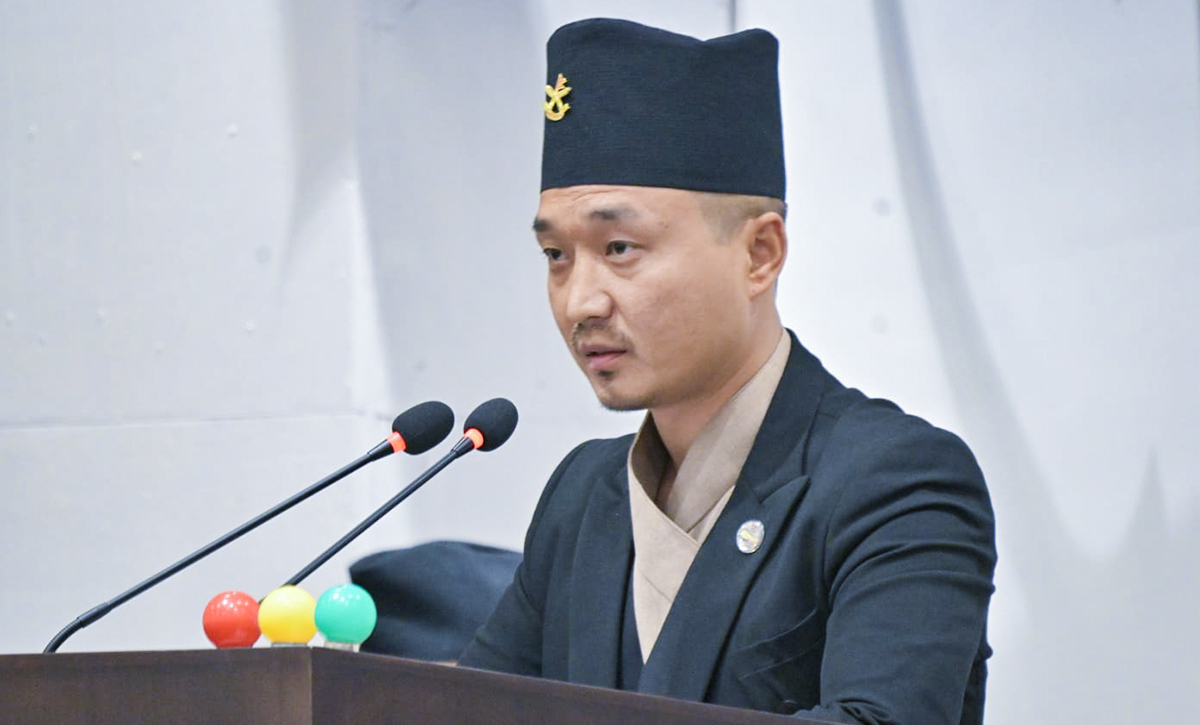
Meanwhile, CA chairman Suvash Nembang said that a constitution should be issued before 27 May by keeping impending the disputed issues and transforming the present CA into a parliament until constitution of the next parliament through a general election. He was of the view that these disputed issues should be resolved by the parliament transformed from the CA (from the extended tenure of the present CA in the name of parliament).  
Prolonging the CA tenure:
At a time when the country is burning, the leaders from the big parties are fighting to get lucrative ministries. The Madheshi leaders are severely dissatisfied from the few leaders, including Bijaya Gachhadar, and they have started to say that they have been betrayed on the issue of Madhesh. They too are going to demonstration dissatisfaction against the Madheshi leaders in the government.
By discarding all these developments, the leaders from big three parties plus the Madheshis are trying to prolong the CA tenure by giving an incomplete constitution by May 27. Once, the constitution is introduced in any form, the CA will continue until the formation of the new parliament. Therefore, the leaders are in haste for drafting the constitution at any cost to save the huge CA.
Whether such a constitution drafted in haste will be able to address the burning issues in the country, it is a big question.
Nevertheless, such an attitude of the leaders from the big parties will obviously invite confrontation among the Nepalis.
]]>
frontpage Sat, 12 May 2012 00:33:59 +0000
Janakpur bloodbath: Just a casting http://www.peoplesreview.com.np/index.php?option=com_content&view=article&id=8913:janakpur-bloodbath-just-a-casting&catid=34:weekly-news&Itemid=54
As we have been predicting from the beginning that the present day leaders, who lack visionary leadership quality and have become slave of the foreign powers, are provoking/compelling the Nepali citizens for launching another civil war and finally splitting modern Nepal is almost coming true now.
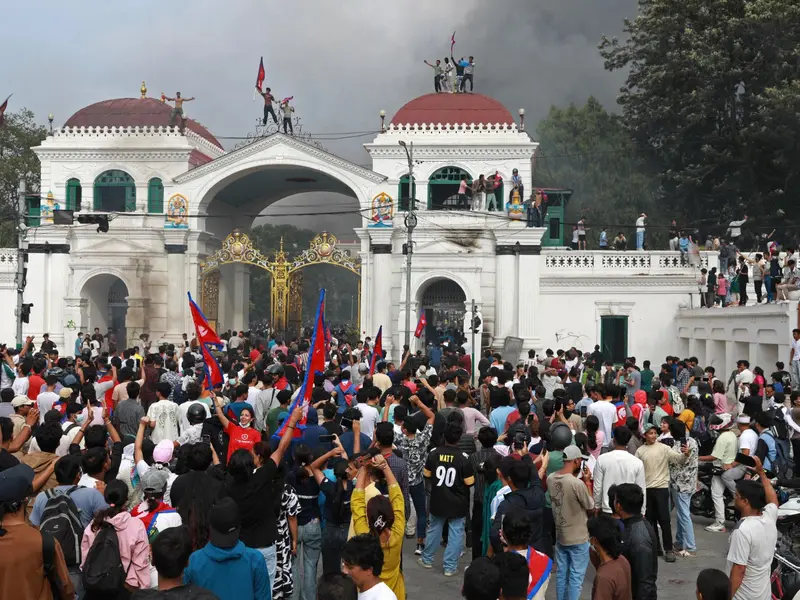
No matter, whether the new constitution is going to be promulgated on time or not, we are already heading towards a serious bloodbath. Monday’s bomb blast in Janakpur, killing four innocent persons and injuring above a dozen people is just a casting of a horrible movie that is going to be produced by the leaders of three big parties plus the Madheshis.
It seems Kathmandu looks peaceful, but apart from the capital city, other parts of the country are burning. For several days, the people from the Far-Western Region have been launching an indefinite period of strike demanding an indivisible Far West province. Similarly, in the East, the Limbus and Rais are demanding separate provinces for themselves. In the tarai, one group, specially, those who migrated from India, are demanding that the entire tarai area be declared as one province. Meanwhile, the ethnic communities are demanding for their own identities. For example, the people from Janakpur area are demanding for a Mithila Pradesh. Likewise, the Tharus, who are claiming themselves as the “dhartiputra” (son of the soil) are against the Madhesh Pradesh and demanding for Tharuhat Pradesh.    
Leaders, specially, the Maoists, have provoked the communal groups so strongly that now there is no path to return from such promises made to the communal groups, but even after recognizing several communal groups, the leaders cannot satisfy other communal groups, hence, this will invite bloodbath among the Nepalis.
Better late than never:
The country is passing through a crucial phase, where, our sovereignty, independence, unity, nationality and cultural identity are in danger. The country has become playground of different power centers with their vested interests of provoking communal groups, disturbing religious harmony by transforming Hindus and Buddhists into the Christian religion. Now, the situation is beyond the control of the leaders. If the political leaders want to save the country, the only and best option is to return to the 1990 constitution, which was regarded as the best ever constitution in the world. There is a popular saying “better late than never”. If we are going to be finished by introducing a new constitution, it is better to return to the past and save ourselves and our soil. We have wasted a valuable period of time and we should not repeat the very mistake again and again!
]]>
frontpage Sun, 06 May 2012 00:21:40 +0000
April Uprising Day: No enthusiasm at all http://www.peoplesreview.com.np/index.php?option=com_content&view=article&id=8888:april-uprising-day-no-enthusiasm-at-all&catid=34:weekly-news&Itemid=54
The government, which was seen reluctant in observing the “Loktantra Day” on 23 April (this year), announced public holiday just two days ahead of the Day. In the official calender, there is no holiday on the day. Why the government was reluctant in observing the day of achieving “Loktantra” in the country, it is surprising? On 24 April 2006, King Gyanendra had proclaimed that he was going to handover the executive power to the agitating parties and also had restored the erstwhile dissolved parliament after several rounds of negotiations between the special envoys of the King and the agitating leaders Girija Prasad Koirala and Madhav Nepal.
When a section of agitators organising “victory” rallies in the streets at midnight, specially, the Maoist activists were carrying out another rally with the slogan that it was a betrayal against the revolution.  
Maoists’ intention:
The Maoist intention was to continue the ‘peaceful” agitation making it more violent and killing more people by utilizing the democratic forces and capturing the state-power. But, considering the situation that may become more violent and to also stop a bloodbath, the King decided to handover the executive power to the agitating parties, which was beyond the expectation of the Maoists. Therefore, the Maoists were not happy from the achievement of “Loktantra”. This is one of the reasons that the Maoists wished to undermine the “Loktantra Day”.
Public dissatisfaction:
The general public too were reluctant in observing the Day as they are feeling that they have been deceived by the political leaders. The general public are saying that this “Loktantra” is just for a limited number of clever and cunning political leaders and not for all the people. “Loktantra” has already completed six years, still the country is in a transitional phase. There is a huge size of the Constituent Assembly, which was elected for two years to write a new constitution. But even after completing its four year term (by extending the CA tenure), the process of constitution writing has not been completed and the leaders of the big three parties are holding secret meetings to resolve the disputed issues outside the CA. The leaders of the three parties have introduced a syndicate system and in the name of developing consensus, they are time and again intervening and violating the very interim constitution they had introduced. The rest of the CA members are compelled to play the role of effigy as they have no role in the constitution drafting process.
After the removal of one king, there has appeared many kings who are enjoying the fruits of “Loktantra” and the rest of the people are compelled to struggle just for their survival. Every day, thousands of the frustrated youths are going abroad for very low quality jobs, as they failed to get any opportunity within the country.
Headquarters shifted:
In these six years of “Loktantra” every Nepali is aware that we have lost the capacity of self-decision and the political leaders from every party are roaming around with their Indian bosses to enjoy the power in Nepal. Until the time when there was the institution of monarchy, Nepal’s capital existed in Kathmandu only. Although, today also, Kathmandu is the capital city, the real capital city of Nepal has become Delhi and nothing is possible here without the decision of Delhi. How a sovereign, independent and democratic country like Nepal became an India dependent country, everybody has understood.     
Under such circumstances, no enthusiasm has been seen among the people in observing the “Loktantra Day”. 
]]>
frontpage Thu, 26 Apr 2012 23:05:40 +0000
“Constitution made in India” http://www.peoplesreview.com.np/index.php?option=com_content&view=article&id=8839:constitution-made-in-india&catid=34:weekly-news&Itemid=54
At a time when the final deadline, 27 May, is coming nearer and nearer, the “supreme” leaders of the big political parties are holding “secret” meetings to resolve disputed issues in drafting of the constitution. Dramatic developments are taking place in the political circle and the leaders are saying that very soon they will be able to develop a consensus for the timely promulgation of the new constitution.
  • Constitution made in India:
Noted legal expert Balkrishna Neupane, at an interaction with this scribe, said that the Indians have already written a constitution and if the Indians become strong, overnight the constitution will be promulgated. He further said that at present, there is a tussle between the European countries and the Indians as the European countries are pressuring for federal states on the basis of castes, whereas India is against such system of federal states. He finally said that in this tussle, if India will be able to make upper hand, the constitution will be promulgated soon.  
According to the leaders who attended the “secret” meeting at the Hattiban Resort, they said that they are very close to a consensus.
  • Story is yet to be over:
Surprisingly, India, the US and even the UN expressed their happiness on the process of the handing over the PLA camps to the Nepal Army. But the story is yet to be over. For doing this also, it took about four years, which had to be done within six months of the UNMIN presence. Therefore, this cannot be taken as an issue of a major breakthrough and not an issue of extending greetings to the government and the Maoists.
Furthermore, after the Nepal Army took its control on the PLA camps, hundreds of the PLAs decided to take volunteer retirement. Now, hardly four thousand PLAs are left who are eager to join the Nepal Army.
The other part of the story is different. The PLAs who preferred retirement, will get a handsome amount of money. In the meantime, Jana Aastha vernacular weekly has reported that the two groups in the Maoist party are in a race of capturing the sophisticated arms looted from the Nepal Army which have not been handed over to the UNMIN to be kept in the containers. During that time, Maoist supremo Pushpakamal Dahal had said that those arms were swept away in rivers.
  • Dangerous plan?
The real PLAs who fought the “people’s war” have already been transformed into the YCL. Rest of the PLAs, who wished to go for integration, also decided to take the “golden handshake” amount. There is a speculation that the PLAs, after retirement, are likely to form another armed force and continue the war.
]]>
frontpage Thu, 19 Apr 2012 05:00:59 +0000
Conspiracy to introduce partial constitution http://www.peoplesreview.com.np/index.php?option=com_content&view=article&id=8836:conspiracy-to-introduce-partial-constitution&catid=34:weekly-news&Itemid=54
It has been confirmed that the Constituent Assembly (CA) tenure cannot be extended anymore after 27 May. It is also confirmed that the constitutional writing process cannot be completed within that time. Therefore, leaders of the major three parties are holding unofficial consultations to introduce an incomplete constitution by 27 May with the provision that the elected parliament will give a complete form to the constitution.
  • SD Muni’s advice:
Indian professor SD Muni visited Kathmandu to attend a programme organized by Nepal-India and India-Nepal BP Foundations. The Foundation in Kathmandu is chaired by the Indian ambassador, whereas the Foundation in New Delhi is chaired by the Nepali ambassador. Such a semi-government organization invited a Muni like person, who doesn’t represent the Indian policy at present. Muni, enjoying the platform offered to him, instructed the Nepali political leaders to introduce a constitution by 27 May.
  • Who is SD Muni?:
Although projected by some media as a Nepal expert, Muni is an Indian who is strongly against a sovereign and independent Nepal. His idea is to make weak all the democratic organs in Nepal and bring Nepal either to the status of Sikkim, that is to make it yet another state of India, and if such a design is not fulfilled, then people like him want to keep Nepal in the present status of Bhutan.
Muni backed the Nepali Maoists by convincing the Indian leaders that he will be able to bring the Nepali Maoists in the mainstream politics and it would help to sabotage the Indian Maoists, which now has become a serious internal security threat to India at present. Muni however, failed in his doctrine, but still he is trying to put pressure on a section of the Nepali Maoists including his student PM Dr Baburam Bhattarai for introducing an incomplete constitution to protect the “achievements” of the 2006 April uprising. He was speaking in such a manner as if he was the boss of the leaders of all the political parties and the Nepali leaders should obey his order.
He clearly affirmed that the 12-point agreement was endorsed in New Delhi under the Indian initiatives and claimed that there is no plan on the part of India to restore the abolished institution of monarchy. According to him, there was a great role of India for the dethronement of the institution of monarchy and making a success of the 2006 April uprising. He took the abolishment of monarchy as a glory. As we know, from the beginning he was strongly against the institution of monarchy and the then Royal Nepal Army which were the strong pillars for safeguarding the sovereignty, independence, nationalism and national interests of Nepal. Therefore, he was always provoking the Indian decision makers for abolishing the institution of monarchy and then steadily weakening other institutions in this country.
  • Counterproductive:
A person like Muni, who is a hardliner, who personally experienced the British behavior of treating the Indians as slaves, was of the opinion that India should treat all the small neighbouring countries in the same manner. In fact, due to the domination of such type of individuals in the policy making level in New Delhi, India failed to develop cordial relations with her neighbouring countries in the past and even now.
Maybe, Muni like Indians believe that India achieved great success after the abolishment of the institution of monarchy, however, the fact is that on the one hand, the country is heading towards a dictatorial one-party communist rule with the schooling of India and the US as enemy force, on the other hand, India has started to complain to Nepal saying that the international terrorist organizations are developing a network in Nepal, which is  a serious security threat to India. Besides, by taking benefit of the instable political situation, other foreign powers have also started to develop Nepal as their playground. India has also felt that now India is not the sole player in Nepali politics. Everything cannot be possible as per the Indian wish. Delhi has understood this very clearly.
  • Indian wish:
Whatsoever the view expressed by SD Muni, that doesn’t represent the Indian government’s policy. The Indians are seriously concerned on disarming the Maoists and transforming the Maoist party into a parliamentarian one. On the other hand, the Maoists are planning to capture state-power either by paralyzing the government organs or by launching an urban revolt by hitting the streets. The Maoists are in a “win, win” position from both the sides. This is also against the Indian wish. Furthermore, the Maoists are demanding for the directly elected presidential rule. On this also, Indians are suspicious. Although India supported the Maoists from the beginning, now India believes that the Maoists has developed relations with India as per the “utility theory” of the communists. Therefore, the Indians are of the view that anytime, the Maoists can betray them and they cannot be trusted on what they say.            
  • Mini constitution:
Now India is not the only player in Nepali politics. The concern of the European countries is to transform Nepal from a Hindu Kingdom to a secular state by issuing the constitution by 27 May. Not to forget, just recently, at a mass meeting organized by the Nepali Congress at Basantapur, NC leader Sekhar Koirala said that the Europeans are influencing the Nepali people through money to establish a secular state in Nepal. Why a leader like Koirala, whose party has already adopted a secular state, spoke against the secular state, it is a point worthy to be noted.
Already, there is a division in the Indian leadership and a section wants to introduce a mini constitution in Nepal before 27 May.
The local intellectuals believe that it is better not to introduce a constitution drafted elsewhere. They believe, introducing a constitution drafted elsewhere will destroy the country. They say that a constitution can be written later, but a bad constitution introduced in a hurry would destroy the nation.
]]>
frontpage Thu, 12 Apr 2012 23:52:03 +0000
Prison terms and fines against corrupt officials Has justice really been delivered? http://www.peoplesreview.com.np/index.php?option=com_content&view=article&id=8816:prison-terms-and-fines-against-corrupt-officials-has-justice-really-been-delivered&catid=34:weekly-news&Itemid=54 By Our Reporter
Nobody had any doubts that corruption was bleeding the country dry and only a few individuals in top level government posts, were enjoying lavish style and also accumulating illegal money, while the general public were suffering.
The recent incidents of two ministers, one former and one a minister in the present government were sent to jail by the Supreme Court on corruption charges. Both Chirinjibee Wagle and Jaya Prakash Gupta were Information and Communication ministers. Both initially belonged to the Nepal Congress and both were ministers when NC led the government. Gupta at present was the president of the MJF (Republic), a splinter group of MJF.
Meanwhile, just a couple of days back, a former IGP, Moti Lal Vohara was sentenced to eighteen months in jail and also slapped with a fine of 5.6 million rupees. Right from the time when he was IGP of Nepal Police, there were rampant reports how Vohara was amassing money through corruption and also by collecting money for favours from the junior police officers.
At the time of going to press, the sentence against another corrupt IGP Achyut Krishna Kharel had not been made public yet, though it was reported that his case would be decided by the Special Court on Wednesday.
There are reports that the majority of the ministers in the present government led by Dr. Babu Ram Bhattarai are also involved in corruption.
But what observers are saying is, “That it has taken such a long time for punishment to be handed down to the accused, is like virtually cheating the laws of the land.”
“That at least a few top level ministers and police personnel have been handed down punishment is a step forward, but the judiciary process in corruption cases against top level government officials, including ministers should be carried out in a swift manner,” the observer commented.
Another expert, who regularly wrote and commented about corruption cases in this Weekly, further opined that the punishments handed down so far, though a step forward, was still not enough. “An individual, like a minister, an IGP or top level bureaucrat, who have been entrusted with so much responsibility and trust of the public, if found corrupt, must be sentenced to life in prison and all his or her property must be confiscated,” he bluntly stated. Only then will people be discouraged from indulging in corruption.
By handing down light prison sentences, people will be further emboldened to be involved in corrupt activities and abuse their power and position. “And comparatively, a two year or so prison sentence and a fine of a few million rupees is nothing,” the commentator said and once more added that all the property in the name of the corrupt individual, even those that he or she may legally have earned must be confiscated if individuals are to be discouraged from abusing power for money and profit.
According to the expert, the other aspect of the present sentencing of the ministers and the IGPs, is, it has taken over a decade for the courts to hand down the punishment. The corrupt individuals not only had enough time to enjoy their ill-gotten wealth, but they could have made handsome profits in the huge time frame between the period they were in power and when finally they were punished. “If it take more than a decade for the courts to decide on corruption charges, then where will the present lot of ministers be in that long period?” he questioned. What if a person dies? Will it not be like he cheated the law and got away with it?
In Nepali politics it is said, late Girija Prasad Koirala was the individual who institutionalized corruption in the country. There are also dozens of reports in the media how his daughter, who was a Deputy Prime Minister and Foreign Minister works only for money and even her son in law was involved in huge corruption cases, including the much sensational Darfur “APC Scam”, because of which three former IGPs have been given prison sentences. It was also during late Koirala’s long tenures as Prime Minister, that many corruption cases took place. Now jailed former Minister JP Gupta was the Official Personnel Secretary of late Koirala and he was also a Minister later under Koirala.
There is no doubt, even the present “light sentences” must be sending shivers down the spine of many whose cases are still pending and indeed for such people like IGPs who led the Nepal Police and were in control of the security responsibilities of the government, have to meekly cool their heels in the prison where they themselves booted in felons, must indeed be a most humiliating experience.
That top level politicians and police personnel are being sent to prison for their crimes, is a step forward, but the question still remains whether justice has been fully delivered, not only because it has taken so long for them to be finally punished, but also due to the “light nature of the punishments handed down.
If corruption, which has been on of the main causes for the many ills and continued poverty of this nation is to be really eliminated, then those found guilty of corruption, specially high ranking officials, should be more severely punished and also those who encourage corruption by giving bribes must be punished.
]]>
frontpage Fri, 06 Apr 2012 06:56:27 +0000
Leaders’ lack of vision has taken nation to a point of no return http://www.peoplesreview.com.np/index.php?option=com_content&view=article&id=8795:leaders-lack-of-vision-has-taken-nation-to-a-point-of-no-return&catid=34:weekly-news&Itemid=54 By Our Reporter
There are several issues that could prove to be difficult stumbling blocks for the major parties to come to an agreement to draft a new constitution for “new Nepal,” but right now the question of federalism and the demands of the Madhesi parties seem to be the thorniest issues.
But before delving further into the mosaic of problems the nation is seeing right now, it will not be out of context to talk about the root causes for the ills that ails us.
In this regard, a senior journalist while commenting on the second death anniversary of late Girija Prasad Koirala, who has been virtually been described as Nepal’s “Apostle of Peace” after Lord Buddha, said, “All we could see was sycophancy from his henchmen, otherwise, he is one of the persons mainly responsible for the present divided Nepal”.
Another senior journalist, who did not want to be named, also said, “When a much more illustrious person like BP Koirala, the elder brother of GP Koirala, has virtually been ignored by the party, how long can GP be remembered?”
This is specially so, when he ignored national priorities, at the time when he signed the Tanakpur Treaty, that became so controversial, but also when he made many other controversial decisions. That the Nepali Congress is much, much behind the CPN Maoist proves the wrong decisions of Koirala. In the 205 seat previous House of Representatives the Nepali Congress had a comfortable majority of 110 plus seats, but in the much larger Constituent assembly it barely managed to win just 30 plus seats.
Though eulogies were written last week on how Koirala contributed for ushering in peace in the country and also bringing in drastic political changes, history will tell whether the decisions made by Koirala, were right or wrong. There is also always the fact that Koirala encouraged corruption, he promoted his relatives and those considered close to the sycophants who surrounded him.
Apart from the weaknesses of late Koirala, who perhaps ruled the nation as Prime Minister for the longest period after 1990, the biggest blunder made by the present day leaders seems to be on completely doing away with the institution of monarchy, dividing the nation into federal states and also declaring the nation as secular, when it had the unique recognition of being the only Hindu country of the world.
Right now, all these issues are hounding the leaders and many are repenting the decisions they made in the euphoria of the India-backed April 2006 uprising, that led to such drastic changes in  the country, which were actually decided by a few leaders from the three major political parties, namely the UCPN (Maoist), the Nepali Congress and the CPN (UML).
Another faction that has come out to be very powerful, is the Madhesi based parties, which have created a joint front and now they have a presence of more ministers than any other ethnic group in the country.
An embarrassing thing for this Madhesi Front, is that virtually all the scandals that have taken place in recent times, has the involvement of Madhesi leaders. Just a few days back, a Minister was beaten up at the meeting of his own party the MJF (Republic).
The President of this party, JP Gupta, who was the Minister for Information and Communication in this government led by Maoist Dr. Babu Ram Bhattarai, is right now cooling his heels in a jail on corruption charges.
Another former Minister of a Madhesi party, is also in jail on the charge of kidnapping a businessman and extorting money from him.
Meanwhile, a scathing commentary was made by a popular TV Channel, which mentioned that all the Madhesi parties have split many times over, not for any ideological reasons, but just to grab power.
“The alarming thing is, if the Madhesi leaders are so shameless in indulging in all sorts of scandalous deeds, one can imagine what they may do if the four point agreement that revolutionary leader Dr. Bhattarai signed with them, is really implemented,” said a senior journalist. Under the four-point agreement, not only the bulk entry of thousands of Madhesi youths in the Nepal Army has been guaranteed, but it has also been agreed upon to establish “one Madhes, one Pradesh”. “If this happens, Nepal will surely be disintegrated,” said the journalist.
While the question of federal system on ethnic lines has brought people, who before were proud to call themselves “Nepalis”, to a virtual confrontational situation, there are increasing signs that more serious conflict will take place, even if the new constitution is framed, as per the agreements reached by the parties. And if the parties fail to frame the constitution, then also there will be trouble.
It is difficult to see the nation easily getting out of the complicated situation that the present leaders have created in the name of building a “new Nepal”, and more important is the question on whether the nation will be totally divided due to the lack of vision of leaders like Koirala and Pushpa Kamal Dahal and the Nepali people see more suffering than they saw during autocratic rules and the conflict period started by the Maoists and now being continued by the Madhesis.
It is said that when an aircraft is making a landing, specially in difficult airports, there comes a period which is called as “PNR” of point of no return, this is exactly where the leaders have taken this nation to and there is no sight of any safe landing.]]>
frontpage Thu, 29 Mar 2012 07:26:18 +0000
Maoists’ calculative move http://www.peoplesreview.com.np/index.php?option=com_content&view=article&id=8766:maoists-calculative-move&catid=34:weekly-news&Itemid=54
It seems, there is a serious rift in the Maoist party between the hardliners and the soft-liners, however, in reality, the party is moving forward towards their final goal of capturing the state-power. Of course, among the political parties, the Maoist is the only party which has done perfect homework and moved ahead with their calculative plans.
One section in the Maoist party, led by Mohan Vaidya, is demanding the resignation of Prime Minister Dr Baburam Bhattarai accusing him of being a traitor. The leaders from the Vaidya camp are saying that at any cost they will topple down the PM. In the mean time, they are saying that there is no chance of a split within the party. They claim that they will fight against the “revisionist” elements by remaining within the party. A political analyst observed such a Maoist theory is to keep intact those dissatisfied force within the party. After the PLA integration process, many of the PLAs, who returned home with a handsome amount through  the golden-handshake policy of the government, are dissatisfied with the party establishment and the Vaidya camp initiated such a move against the establishment camp to keep intact the dissatisfied force, the observer said.
Meanwhile, he observed that PM Dr. Baburam Bhattarai and Maoist supremo Pushpakamal Dahal are seen keen to give a logical end to the peace process, but this is only a strategy of prolonging the tenure of the Maoist led government.
Non confidence of democratic parties:
NC president Sushil Koirala is totally confused from the present political developments. In fact, the government has failed from every aspects and it has become very unpopular among the people. This is the right time for the NC to lead the government. However, Koirala himself seems to be unable to lead the government and also unable to give an appropriate candidate for the post of the PM. Koirala is saying to his party activists that first of all, the Maoists should resolve the PLA integration process. As the Maoists are in the government, they have less bargaining power and only if they come honestly to conclude the integration process, this task will be possible. If the present Maoist led government is toppled down, the Maoists in opposition will have more bargaining power and the peace process may be disrupted, Koirala believes. Therefore, the NC is waiting for concluding of the peace process through the present government.
The UML leaders too are of the same view. They feel that if the present government led by the Maoist will fail to address the peace process, it will be impossible to address the same by the government led by other political parties.
Taking benefit of situation:
PM Bhattarai is saying that he is ready to tender his resignation, but who could be his successor, he has questioned? Indeed, there is no alternative candidate to replace Dr Bhattarai. Taking benefit of the situation, Dr Bhattarai is trying to prolong his tenure as the PM instead of giving a logical end to the peace process. Dr Bhattarai’s plan is to continue this government till 27 May (14 Jesth) and announce an election and lead the election government himself for the benefit of his party.          
The Maoists believe that they can sweep the elections and be able to bag two-thirds majority with the mandate of drafting a new constitution as per their wish, or say, introduce a communist constitution.
Ground reality:
Indeed, the NC and UML are seen as weak at the grassroots organization level. There have been seen two sections of voters – pro-republic or pro-monarchist. The pro-republic force believes that the Maoist as a true republican party whereas the pro-monarchist force believes that RPP (N) is the only party committed for restoration of a Hindu Kingdom. RPP (N) has assumed that it holds 30 percent of vote banks and if other former pancha parties RPP and RJP will also support the agenda of the RPP “N”, the united party of the former panchas can bag majority in another election. On the other hand, the NC and UML, which have followed the Maoist agenda, have become the parties having no agenda. In this regard, the main losers are the NC and UML.
Conclusion:
The Maoists have done good homework and heading towards capturing state-power by making fool of all the democratic parties as well as the international community. Internal rift, lack of visionary leadership, weak organization at the grassroots level, among others, witnessed in the democratic parties have been taken as the opportunity by the Maoists to use for their own benefit.
]]>
frontpage Thu, 22 Mar 2012 07:59:54 +0000
Time ticking away: Benevolent or dictatorial rule for the people? http://www.peoplesreview.com.np/index.php?option=com_content&view=article&id=8734:time-ticking-away-benevolent-or-dictatorial-rule-for-the-people&catid=34:weekly-news&Itemid=54
Just about two and a half months remain for the present lot in the Constituent Assembly (CA) to deliver the task that the people had entrusted them with. That is to draft a new constitution for the nation.
But if one is to look at things on the surface, then it looks like there is little chance of the parties accomplishing which they couldn’t do in more than three years.
Though the leaders of various political parties, specially “Three plus the Madhesi Front” seem to be in hectic consultations, mostly at exotic resorts, there is little sign that the “Gang of Four” can do what they have not been able to do in the past four years. That is unless there is divine – read it as foreign – intervention.
The political change, with the King “restoring” the redundant House of Representatives, took place in 2006. After that, the date of the Constituent Assembly election, the first task of the parties, was postponed exactly like the manner in which the life span of the CA has been extended for four times.
The nation should have seen a new constitution by 2010 and another election should have been held, but the “Big Three”, namely the UCPN (Maoist), the Nepali Congress and the CPN (UML), amended the Interim Constitution for more than a dozen times, for trivial issues, including extending their own tenure in the CA. Now the Madhesi parties, which have formed a joint “Front” is also part of the decision makers and in fact perhaps for the first time in the history of this country, there are more Madhesi ministers in the cabinet than the “Pahades”.
But to come back to the main theme of whether the “Gang of Four” can come up with a new constitution in just a little over three months, is the most vexing question for the Nepali people.
At a function in Kathmandu on Monday, none less than Pushpa Kamal Dahal “Prachanda”, the Chairman of the UCPN (Maoist), the largest party in the CA and which still has combatants and a semi-military type of organization under it, admitted that due to the differences and difficulties in the drafting of the new constitution, development activities had been over looked.
It is not only development activities, but even the basic needs of the general populace have been overlooked.
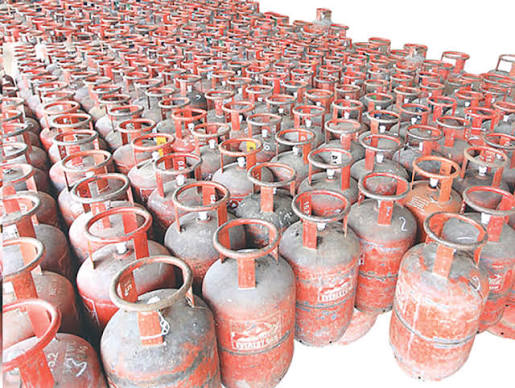
There is daily load shedding of ten hours, there is scarcity of cooking gas, kerosene and petrol, no water flows from the taps and market prices are sky rocketing. These are things which a government in any country should be concerned about, but that does not seem to be the case in “new Nepal”.
Girija Prasad Koirala, who led the “revolution” for the political change in April 2006 has long died, though he did manage to run the office of the Prime Minister from within his bedroom in Baluwatar for many months. Late Koirala also had ambitions of becoming the first President of a republic Nepal.
“Prachanda”, another presidential contender, took over from where Koirala left, but the country saw no marked progress in any sector, including in the constitution making progress and logical end of the still ongoing peace process.
Weaker Prime Ministers like Madhav Kumar Nepal of the UML and then Jhala Nath Khanal became Prime Ministers after “Prachanda” was forced to tender his resignation, but when a powerful leader like Prachanda could do nothing, it was almost ridiculous to expect anything from the likes of Nepal and Khanal.
Through a surprising alliance with the Maoists, the wily Dr. Bau Ram Bhattarai became the fifth Prime Minister of the nation after the April 2006 change, but though much hopes were pinned on his ability to bring change, the people have been witness to more inflation, lawlessness and a “jumbo” cabinet, though they were promised government austerity.
Apart from the fact that the present government has not been able to address any of the problems of the general people, and also allegations that many of its ministers are involved in corruption, the biggest bone of contention among the parties seems to be in deciding on what sort of a federal structure that the nation should have.
If the country is to m0ove forward, either drastic revolutionary methods have to be taken, which have failed in many other countries, or traditional rule should be reintroduced for the betterment of all the citizens and also for a tolerant and benevolent rule. The time schedule of the CA is already over, now the time has come for the people to decide and the political leaders must abide by what the people say. The same rule follows for the foreign donors who have so much sway in Nepalese politics.
       
]]>
frontpage Thu, 15 Mar 2012 09:31:34 +0000